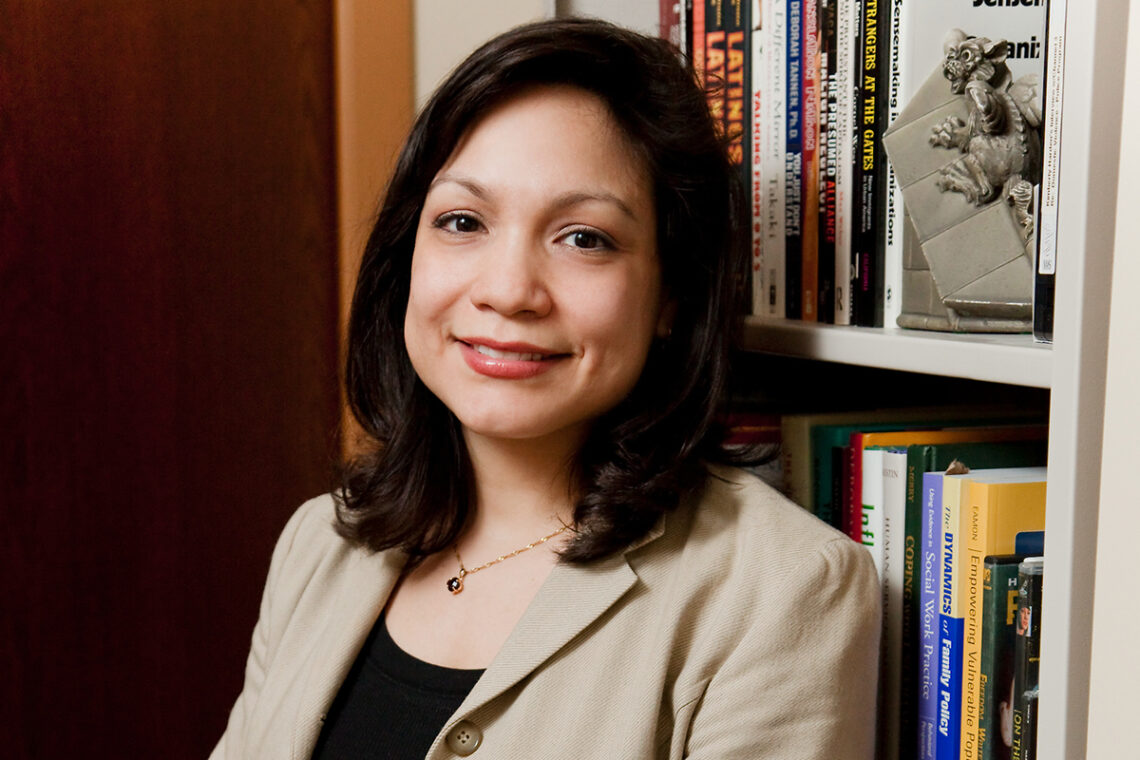
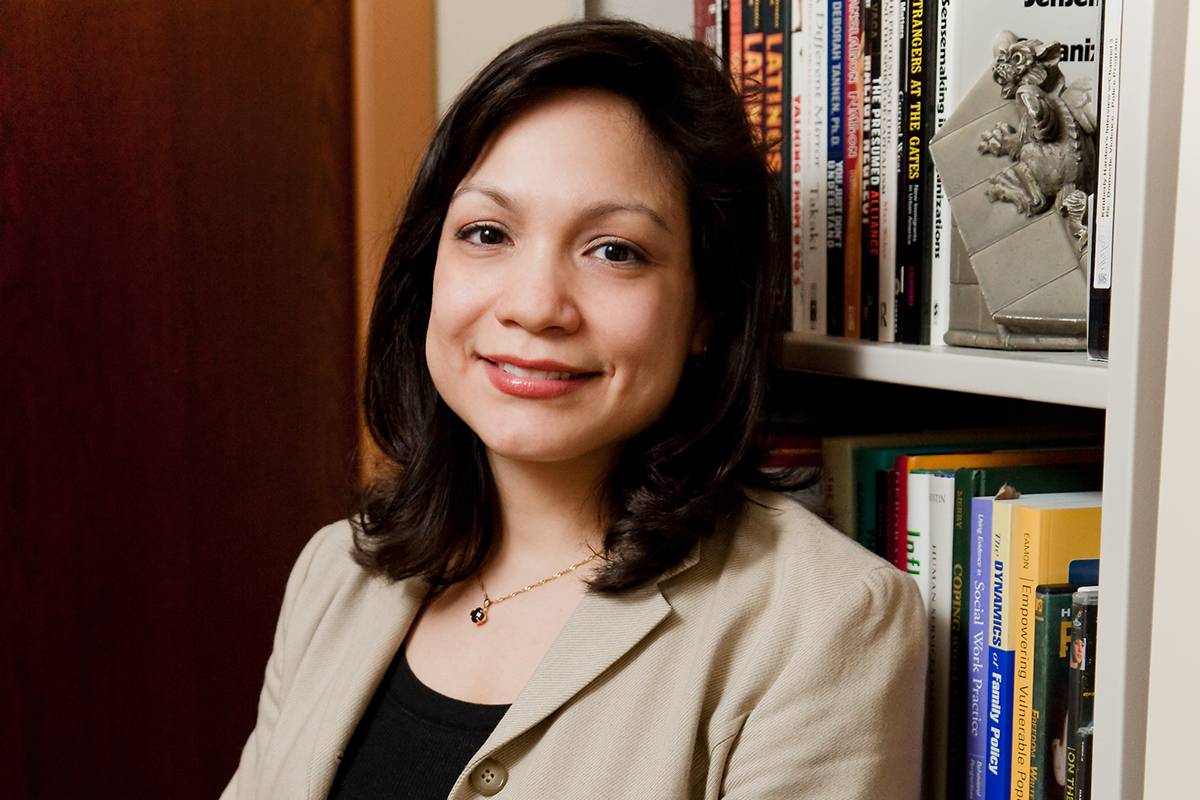
CHAMPAIGN, Ill. — Lissette M. Piedra, a professor of social work at the University of Illinois Urbana-Champaign, will lead a $17.8 million research project funded by the National Institutes of Health that will explore how caregiving experiences evolve over the life course, shaping caregivers’ health and well-being in later life. Piedra is the principal investigator for the project, in collaboration with colleagues at NORC at the University of Chicago, a nonpartisan research organization.
Piedra, who is also a senior fellow at NORC, collaboratively developed the study with NORC senior research scientists Melissa Howe and James Iveniuk. The multi-institutional team also will include scholars from Johns Hopkins University, the University of Chicago, the University of Michigan and the University of California, San Francisco.
“Caregiving is often studied as though it were a single role that someone either occupies or does not,” Piedra said. “People may provide care at several points in their lives, to different people, under very different circumstances. This study gives us an opportunity to understand caregiving as a life-course process and to examine the networks of people surrounding that care.”
The study will build on the National Social Life, Health and Aging Project , a nationally representative study that has followed older adults in the U.S. for nearly two decades, gathering extensive information about their health, social relationships and social networks. The NIH’s National Institute on Aging funds both NSHAP and the NSHAP Caregiver Study through awards to NORC.
The study grew out of Piedra’s earlier NIH-funded research developing and assessing the Care Network Measure, an instrument that captures the broader network of people involved in caregiving. Researchers will pair the measure with a life history calendar to document caregiving episodes across adulthood to reveal how caregiving experiences and care networks evolve over time and how different trajectories affect health and well-being.
Participants in the upcoming fifth round of NSHAP will be asked whether they have ever been a caregiver, allowing researchers to identify current and former caregivers as well as those who provided care before age 18. The NSHAP Caregiver Study will then document participants’ caregiving histories and the networks of family members, friends and others who share, coordinate, complicate or support care.
By linking these new data with nearly two decades of NSHAP health and social data, the study will provide an unprecedented opportunity to examine the intersections of caregiving histories, care networks, social relationships and health across the life course. The findings can inform public understanding of adult caregiving and guide interventions to strengthen care networks and improve health across adulthood.
“For some people, caregiving begins in childhood or adolescence, and evidence suggests it may be more common than previously recognized,” Howe said. “Yet we know little about its long-term effects. Capturing early caregiving will allow us to examine its relationship to childhood adversity and its implications for education, health and caregiving later in life.”
The research team includes University of Chicago faculty members, NORC senior fellows and longtime collaborators Linda J. Waite, the principal investigator of NSHAP; and Colm O’Muircheartaigh, a leading survey methodologist; along with investigators from the University of Chicago’s Biological Sciences Division.
Other team members include Jennifer Schrack, a professor of public health and the director of the Center on Aging and Health at Johns Hopkins University; Megan Huisingh-Scheetz, a professor of medicine at the University of Chicago; Dr. Ashwin Kotwal, a professor of medicine at the University of California San Francisco; and William Axinn, a professor of sociology at the University of Michigan.