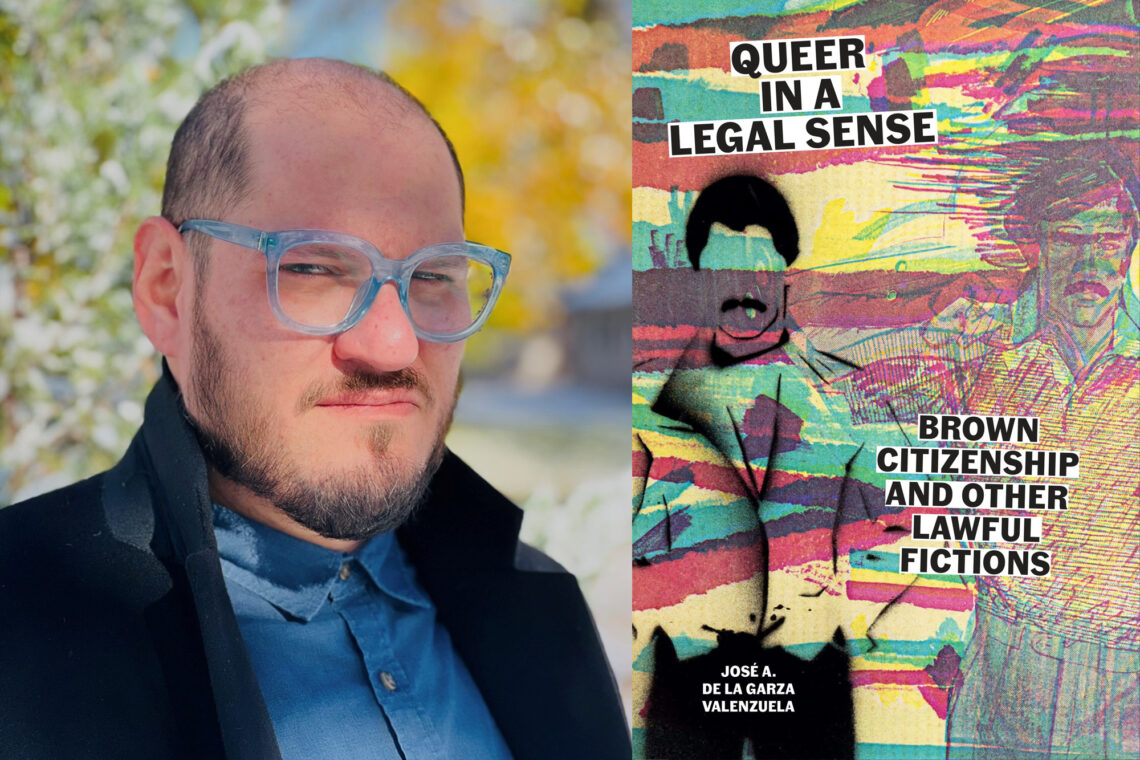
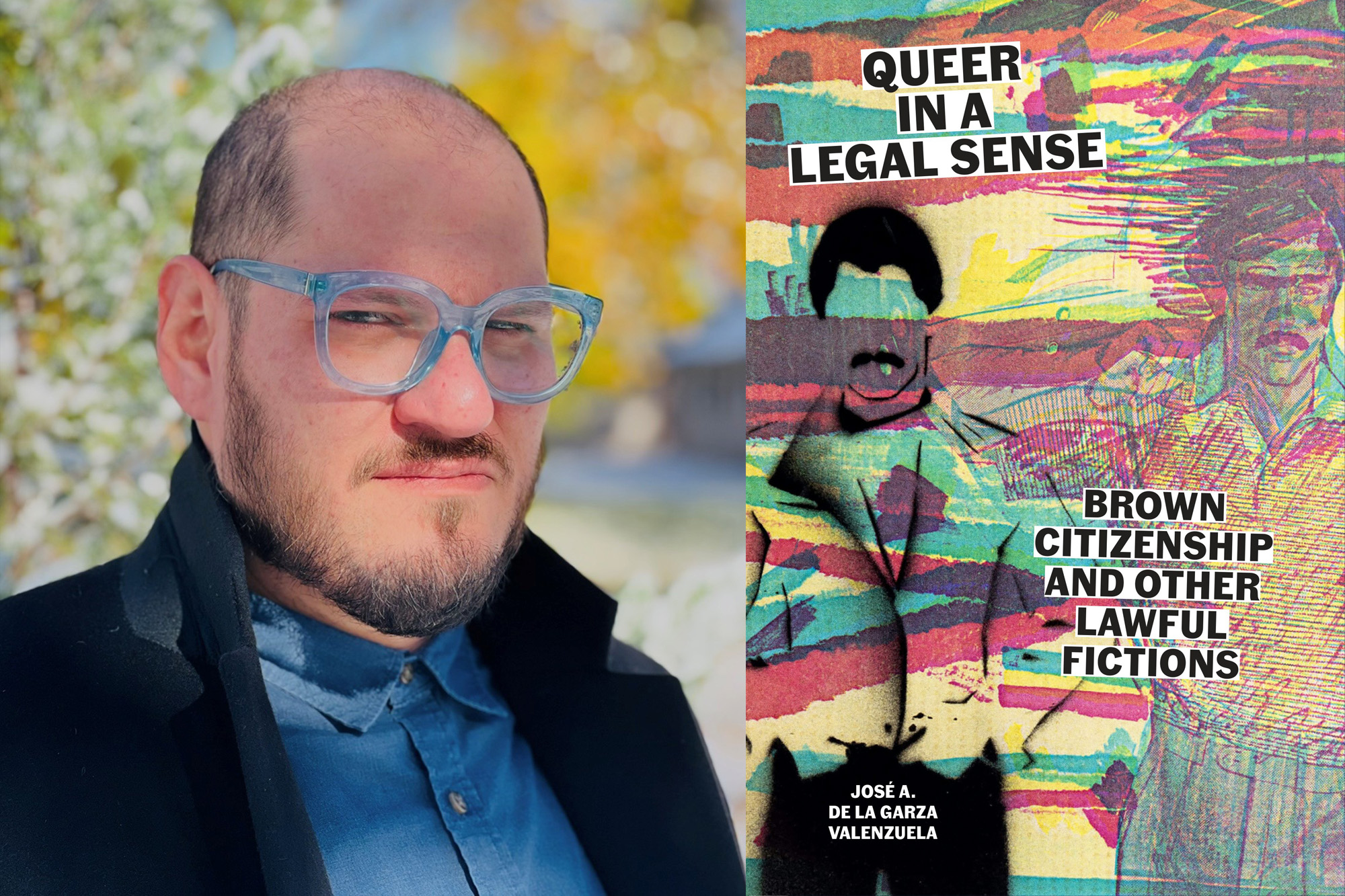
CHAMPAIGN, Ill. — José A. de la Garza Valenzuela, a University of Illinois Urbana-Champaign professor of Latina/Latino Studies, looks at the experiences of queer migrants, and at how immigration practices shape particular fictions about them, in his new book “Queer in a Legal Sense: Brown Citizenship and Other Lawful Fictions.”
The book combines literary and legal studies. De la Garza Valenzuela analyzes fiction written by gay Chicanos, like John Rechy, Arturo Islas, Michael Nava, Jaime Cortez and Rigoberto González, and juxtaposes their stories with an examination of legal cases adjudicating immigration and sexuality.
He said that immigration laws allow the government to define what the country is or imagines itself to be and to tell fictions about immigrants in ways that helps it enact policies, like mass deportations, that overwrite their actual experiences. The semiautobiographical literature he cites in the book offers a documentary portrait and context of the lives of intra- and transnational migrants whose stories are told by the government only through arrests or court decisions, he said.
De la Garza Valenzuela is a naturalized citizen, and he said he realized while going through the naturalization process that “my story was so different than the story I was being asked to confirm. It is so much fuller and more nuanced. The process tried to standardize a particular kind of entrance that made us all equally worthy or equally undesirable.
“The book is trying to show how the story of our participation and belonging in this country has been authored by stakeholders other than ourselves,” he said.
De la Garza Valenzuela defines lawful fictions as the narratives that are created through the interpretation and enforcement of laws, rather than being codified within the laws. They include the language and literacy tests that kept Black citizens from voting and are not standard practice in naturalization proceedings, he said.
He wrote that the Immigration Act of 1917, which introduced literacy tests for naturalization, “also introduced purposely unintelligible language that would stand in for homosexuality and a range of other traits deemed undesirable by the state in one form or another for several decades.” Terms such as “psychopathic inferiority” described gay men as deviant and lingered on in policies that prevented people with HIV/AIDS from entering the U.S. until 2010. Similarly imprecise language was used to exclude Chinese migrants in the late 19th century, and such lack of precision “allowed its exclusions to be more expansively applied” to other “undesirable” groups by turning over the interpretative power to the courts to determine who was included in those groups and how, he wrote.
The interpretation and enforcement of immigration laws make the contradictions of policy clear, de la Garza Valenzuela said. For example, he cites Jaime Cortez’s biography of Adela Vázquez, a transgender activist who was part of the 1980 Mariel boatlift, a mass emigration of Cubans to the U.S. The biography demonstrates how her migration depended on the misrecognition of her sexuality and gender identity that allowed her to leave Cuba and enter the U.S. De la Garza Valenzuela wrote that immigration law was flexible enough to enforce contradictory policies that allowed homosexuals to seek asylum from persecution in Cuba while simultaneously excluding them from other immigration channels and also persecuting them within the U.S.
He said that today, the family relationships required to sponsor someone through the immigration process must be a particular kind of relationship. “The legal categories are very specifically mobilized to produce a certain kind of citizenry,” he said.
De la Garza Valenzuela said the current issues of U.S. Immigration and Customs Enforcement agents arresting people off the street and sending them to detention centers, works by queer authors being pulled of library shelves and birthright citizenship being challenged might seem new, but they are part of the historical management of citizenship.
“Citizenship is not a rigid benchmark for legal inclusion, but a malleable category buttressed by narratives institutionalized by those authorized to interpret and enforce the law’s fictions,” he wrote.
He takes a broad view of migration.
“It’s not just about Latinos,” de la Garza Valenzuela said. “We’re all prospectively migrants, even if we’re citizens. What might it mean for a family to have to leave a state because their transgender child is being attacked by the state, or for a woman to leave because she can’t get access to certain kinds of reproductive care? That is migration. Migration is not just transnational, it’s also intranational and compelled by laws that harden the borders between states.
“Everybody has a stake in this conversation.”
Editor’s note: To contact José A. de la Garza Valenzuela, email delagv@illinois.edu.