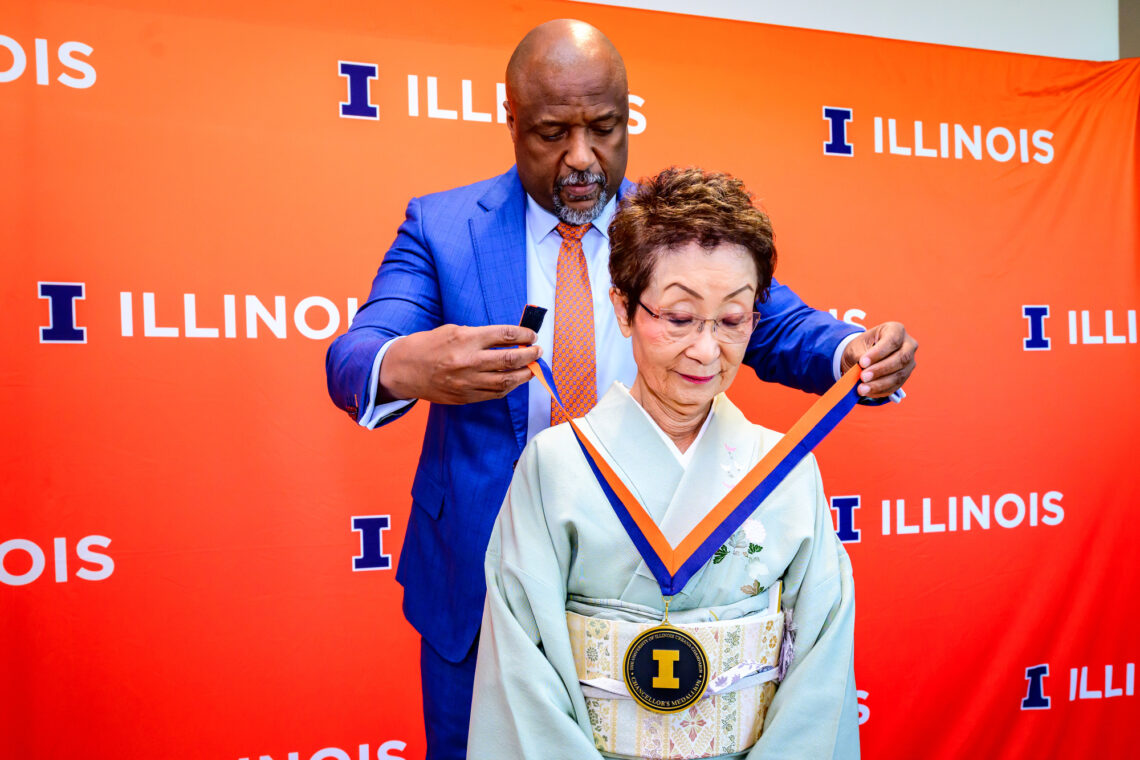
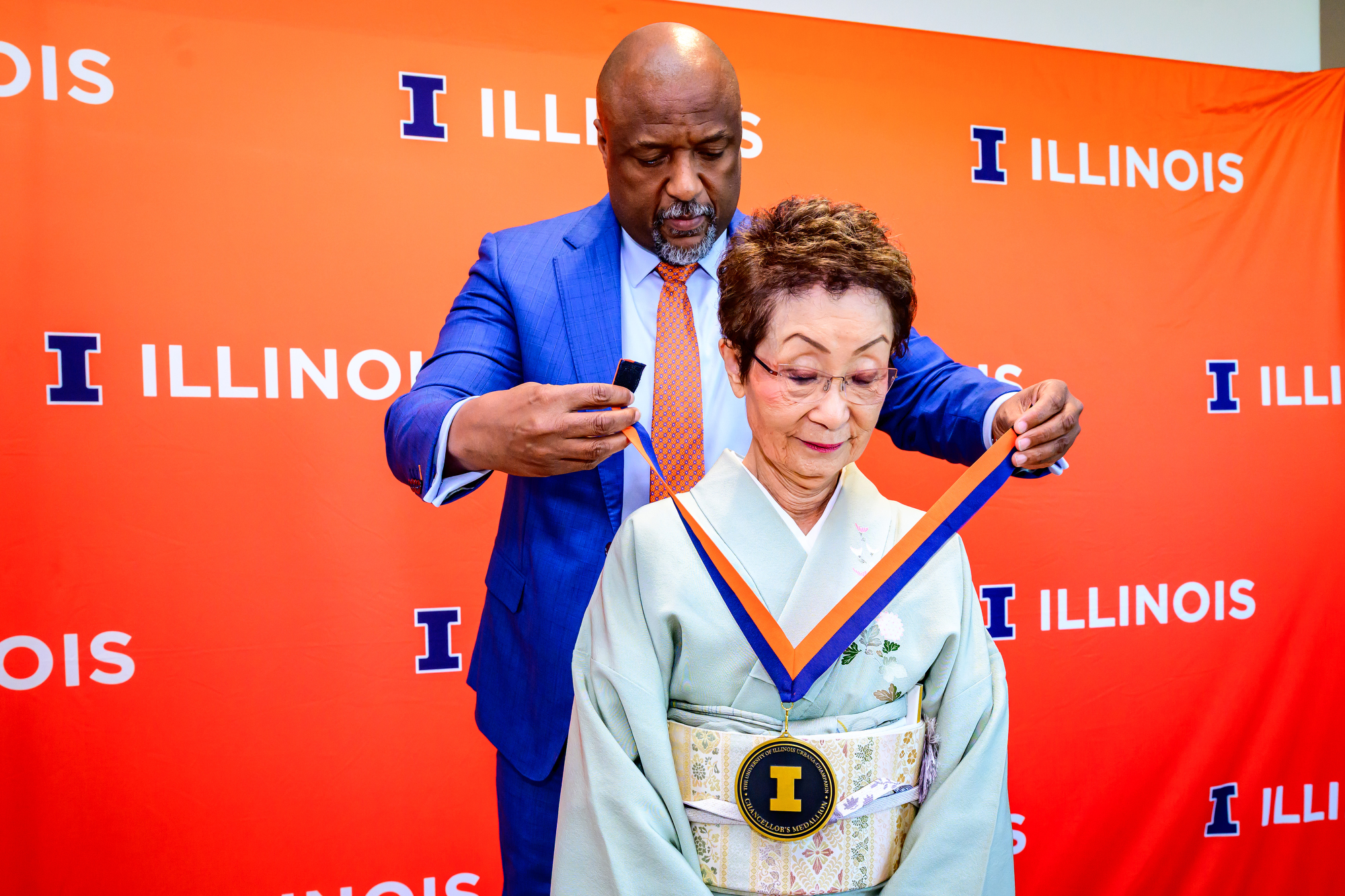
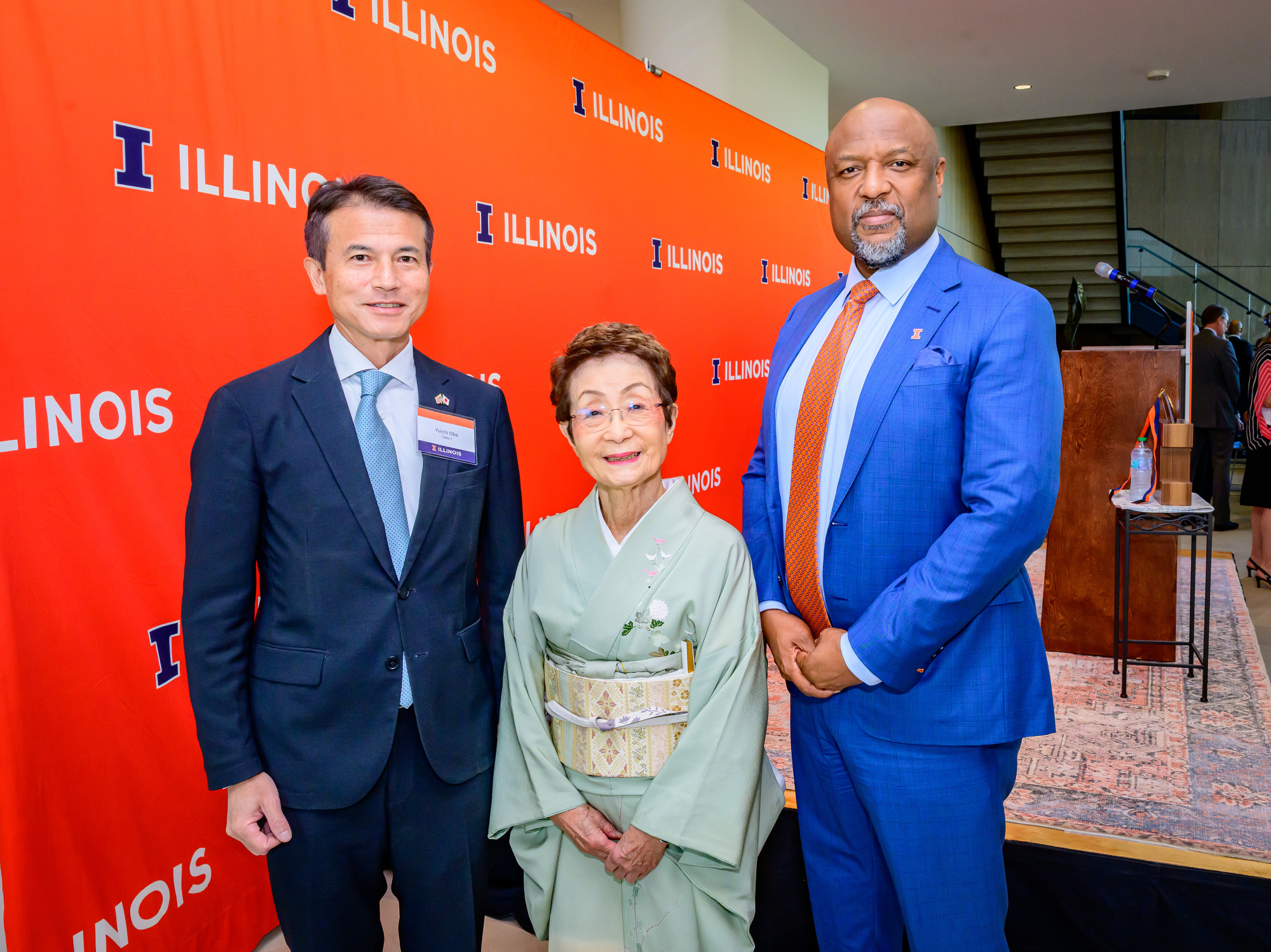
CHAMPAIGN, Ill. — Kimiko Gunji, a professor emerita of Japanese arts and culture in the School of Art and Design at the University of Illinois Urbana-Champaign and the former director of Japan House, has been awarded the Chancellor’s Medallion, the highest campus honor.
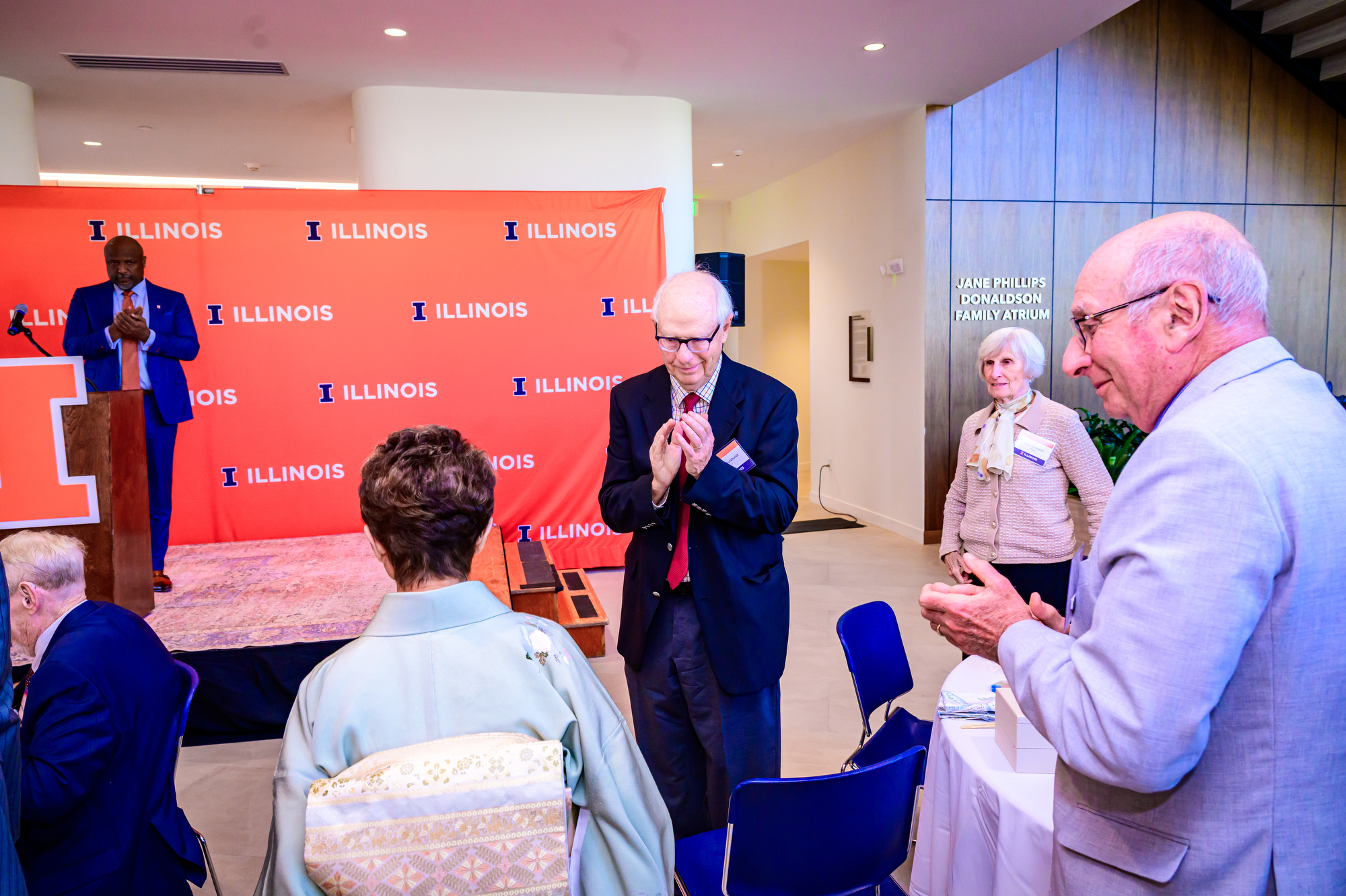
Gunji received the medallion at a ceremony on Oct. 11. It is the 11th time the medallion has been awarded since it was first presented in 1999.
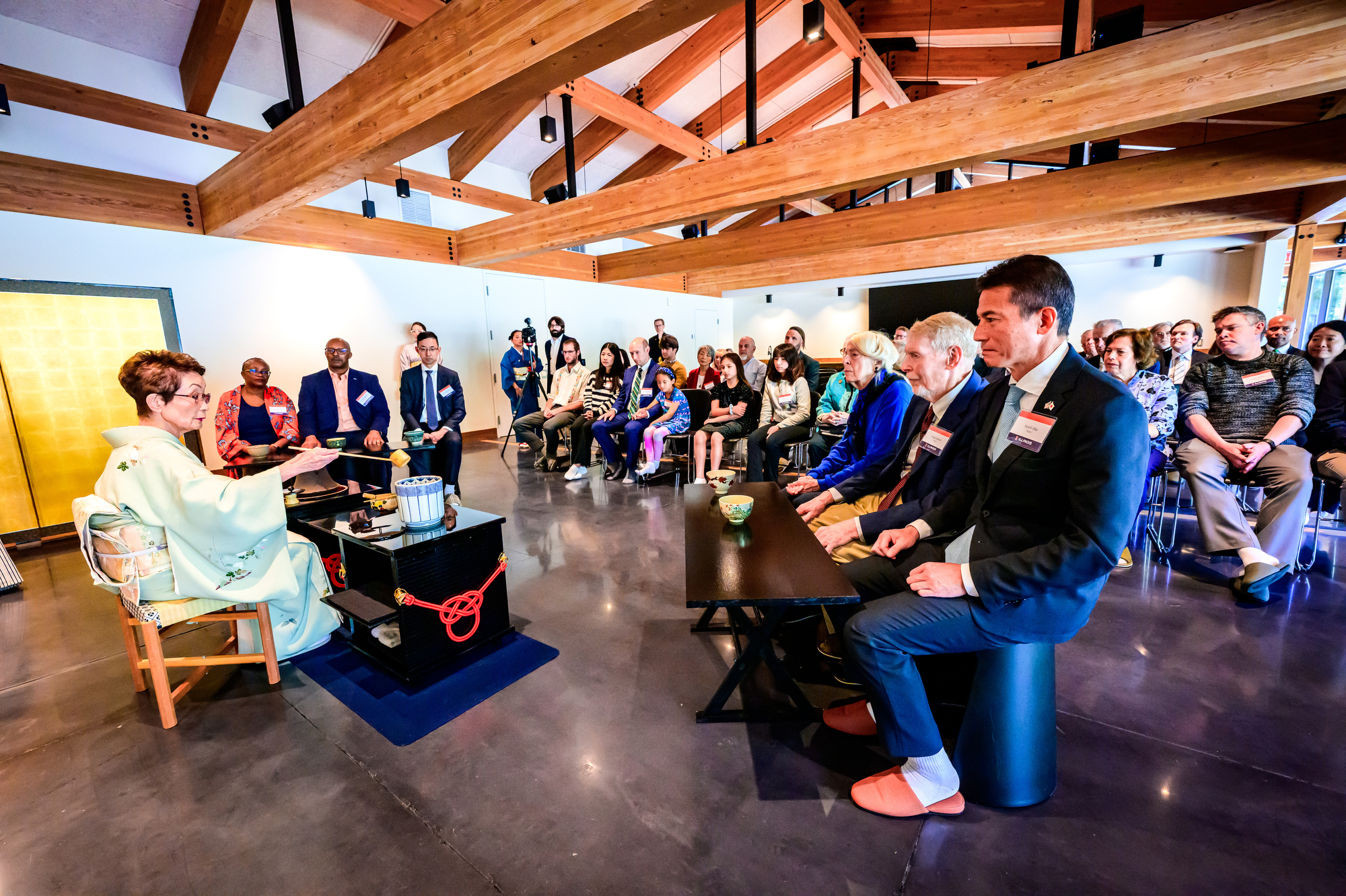
Chancellor Charles L. Isbell Jr. said the award honors Gunji’s “career of achievements and passionate dedication to creating new opportunities for everyone to interact with Japanese arts and culture.
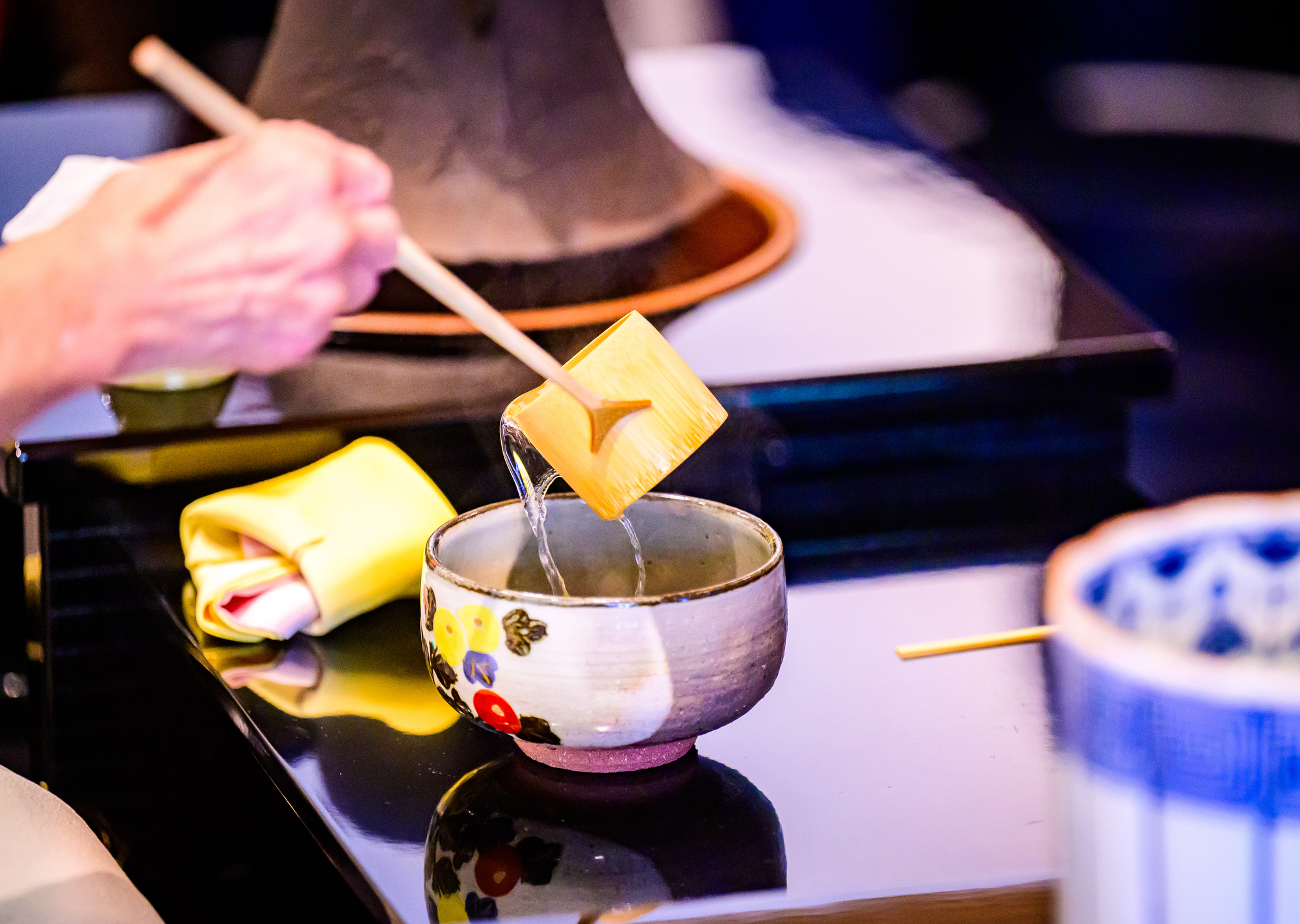
Credit: Photo by Fred Zwicky
“Not the least of those achievements is your vision and leadership of Japan House, which has transformed it into one of the cultural treasures of our university and the Champaign-Urbana community. Through art, you have helped generations of people experience and understand the world and one another in new ways,” Isbell said.
“This award is not just for me alone, but also for those who have given me such incredible opportunities, encouragement, friendship and support over the years,” said Gunji, who thanked the late Shozo Sato, the founder of Japan House and a teacher of Japanese arts who gave her the opportunity to begin teaching at Illinois in 1973.
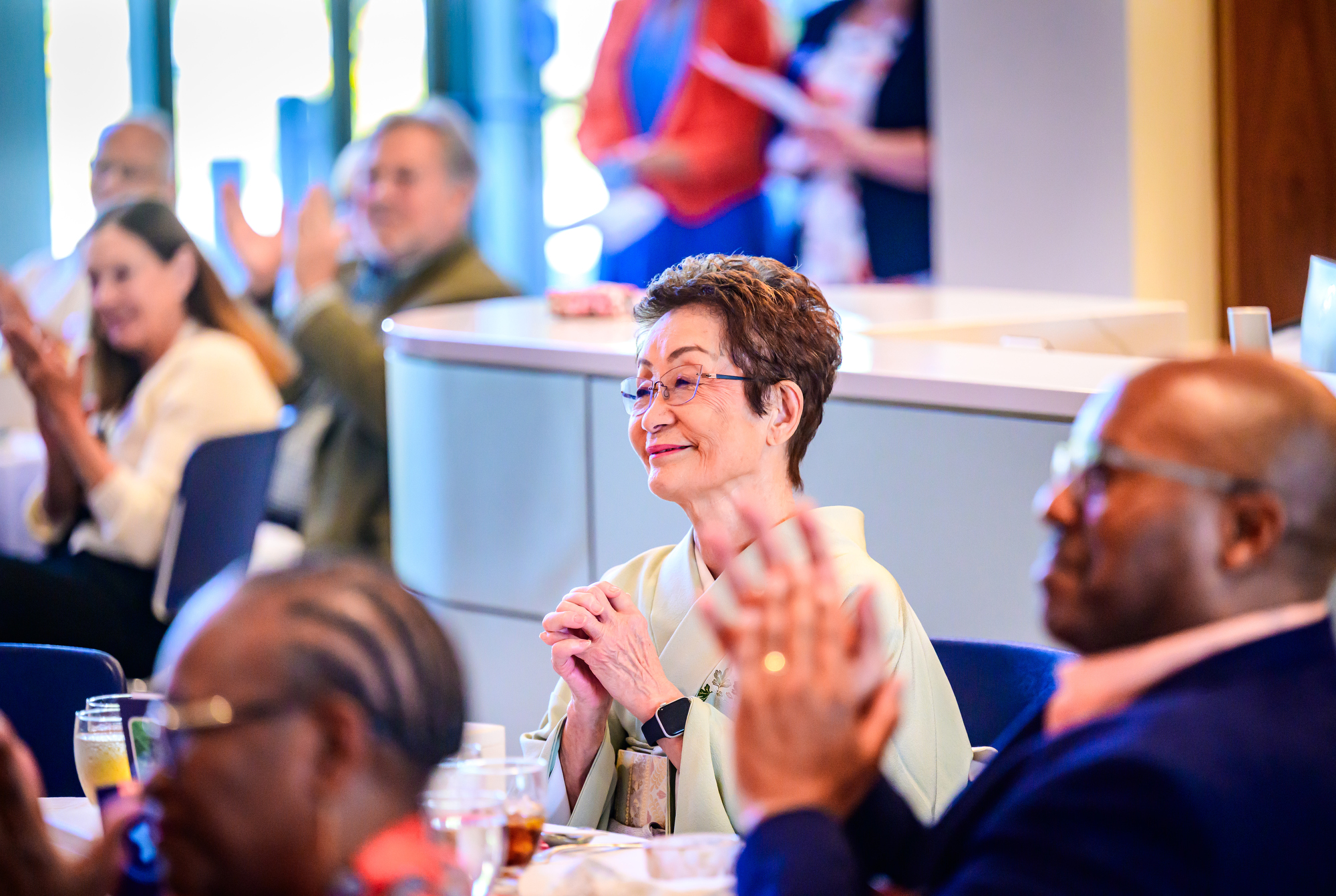
Gunji taught classes in Japanese arts and culture; ikebana, or Japanese flower arranging; and chado, or the Japanese way of tea. She has received numerous awards for her teaching and her contributions to promoting Japanese arts and culture, including the Order of the Rising Sun from the Japanese government.
Gunji was the director of Japan House from 1998-2011, and she was instrumental in establishing its permanent teaching facility in the Arboretum. After the first location of Japan House was demolished, she worked with then-Associate Vice Chancellor Roger Martin to find a location for a new building, and she raised $2.5 million by soliciting support from former students, businesses, the Japanese government, Japan Illini Club and the Urasenke School of Tea, said Diana Liao, the education and engagement coordinator for Japan House.
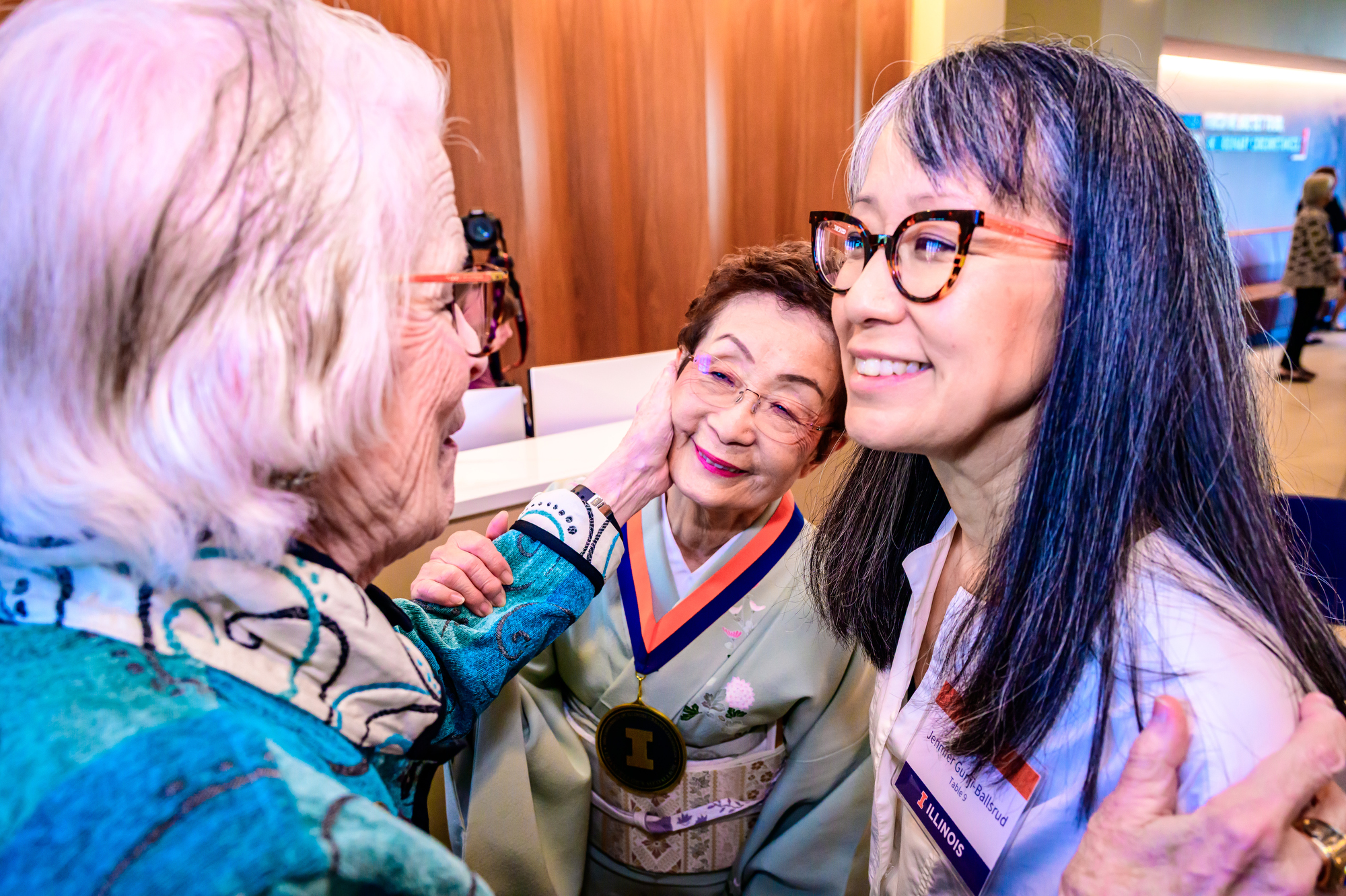
Even more than the building, though, Gunji has influenced decades of students from disciplines across campus by expanding their world view and teaching them to be sensitive to others, their surroundings and their community, Liao said.
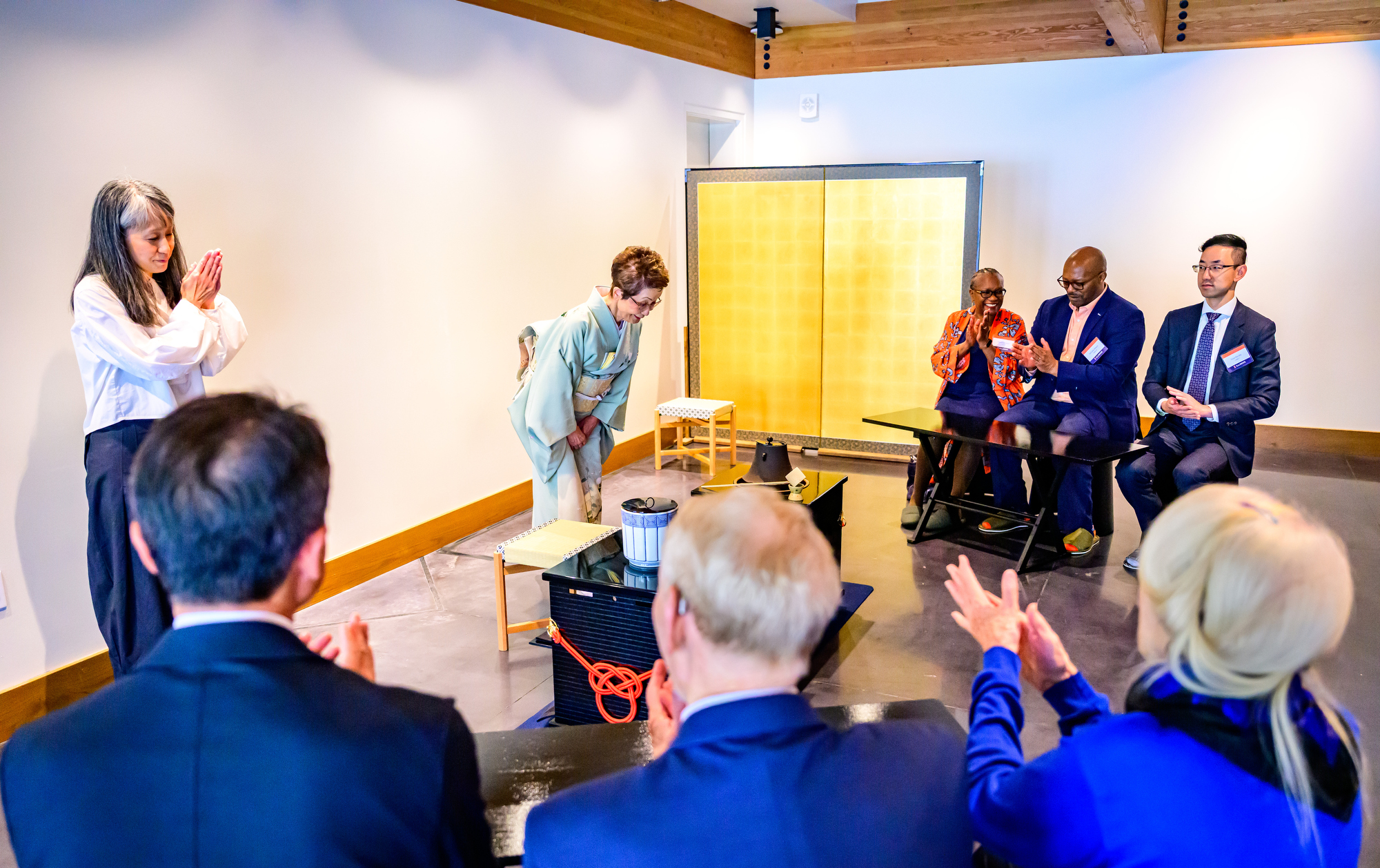
“Even something as ordinary as serving tea to someone is about how to best present it, how to give the utmost consideration to those around you and how they respond in kind. Her legacy of teaching all those principles through the lens of Japanese arts is truly exemplary,” Liao said.
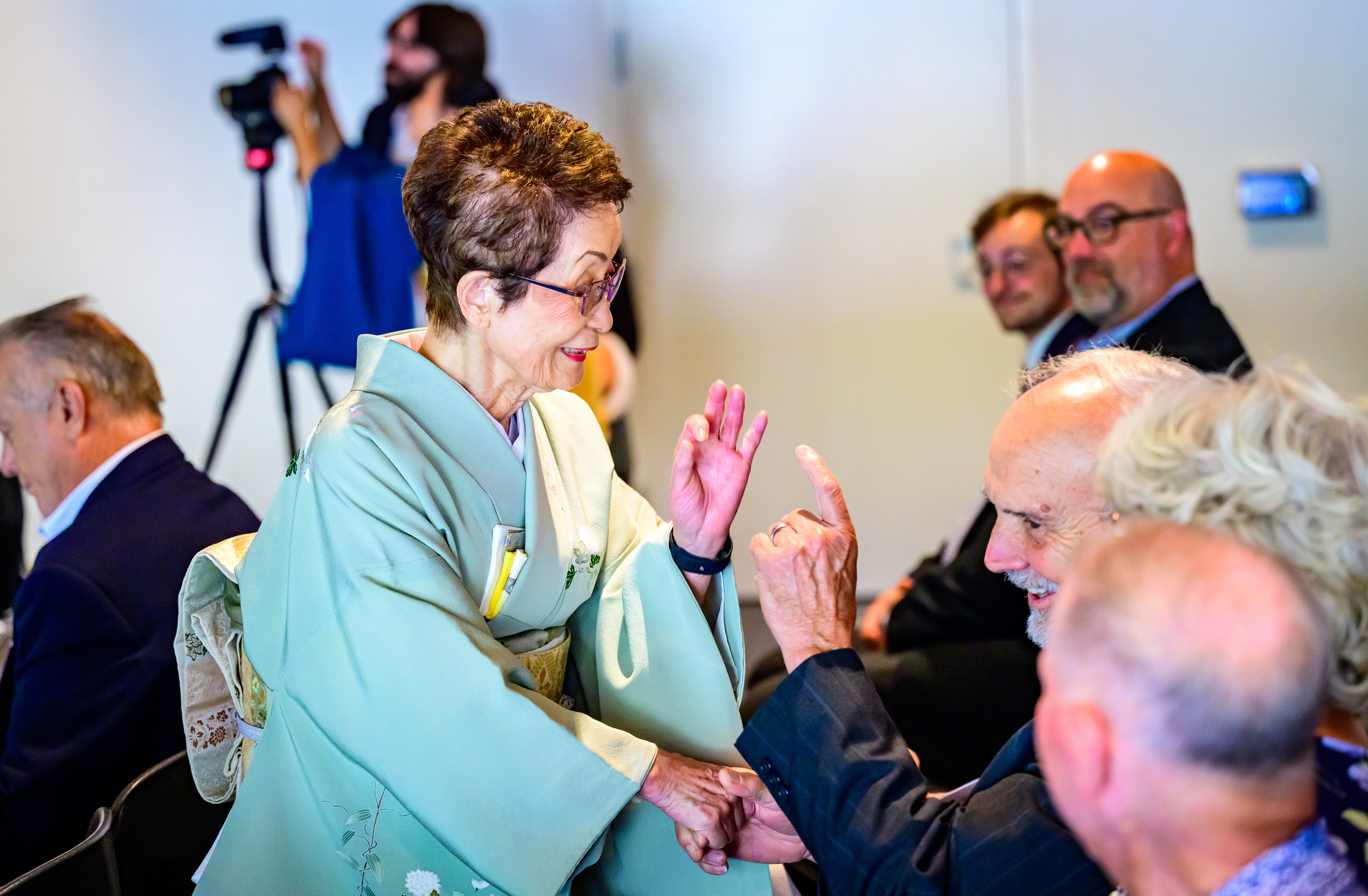
“It is about how to live, how to make the ordinary so much more extraordinary, and, in doing so, perhaps we can better understand ourselves and what it means to truly live as a human and engage with the world around us,” she said.
Laurie Jacobi, an artist and textile designer in Minneapolis, was a student in Gunji’s classes from 1979-81. She said Gunji profoundly affected her life.
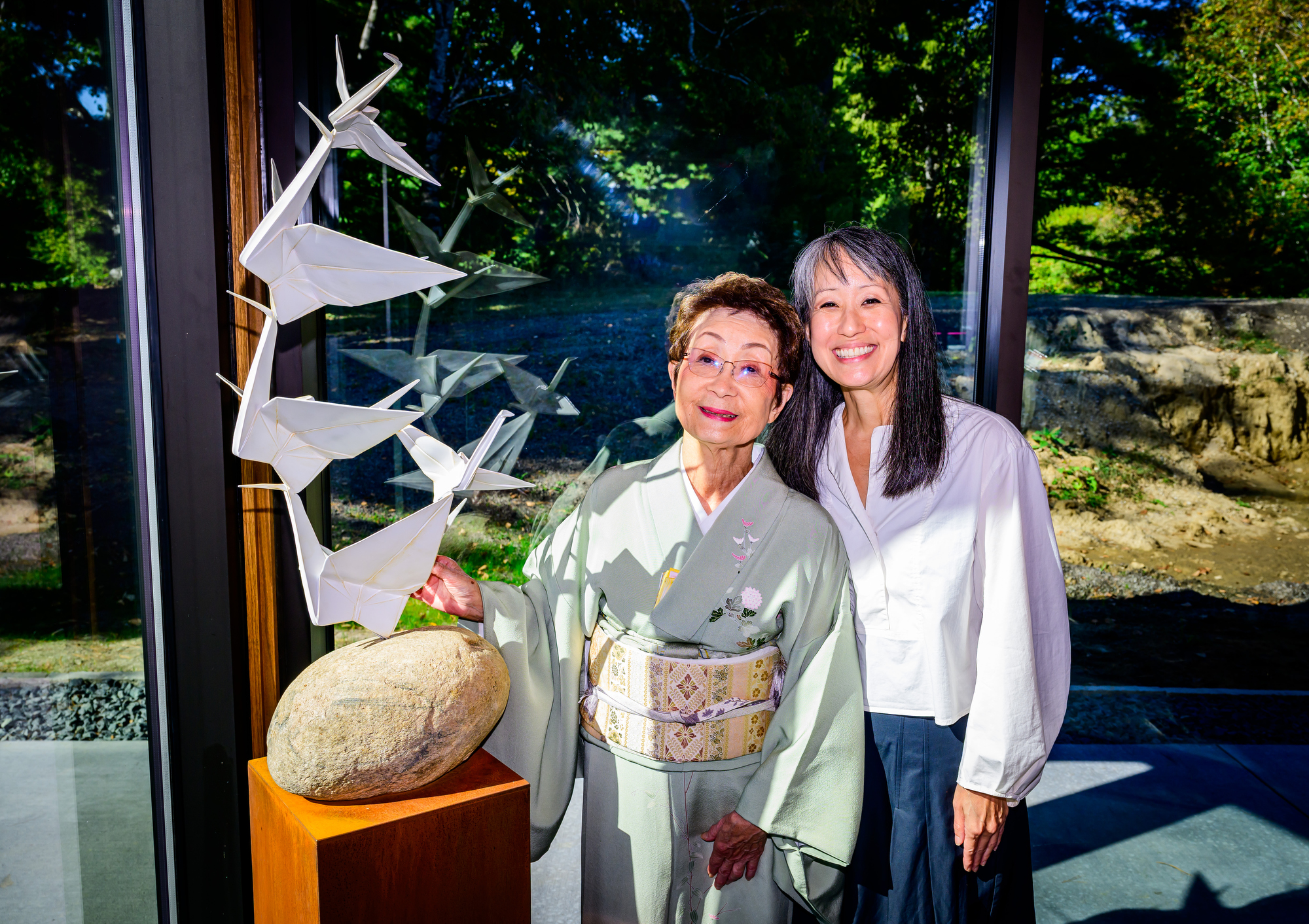
Photo by Fred Zwicky
“No professor instilled in me such a deep respect for the sacredness of nature and our connection to it,” Jacobi said. “No professor exhorted me to appreciate the beauty and opportunity in every moment we have, to find peace in the middle of this chaotic world with a bowl of tea. As I age and face so much loss, I am constantly reminded of that lesson.”
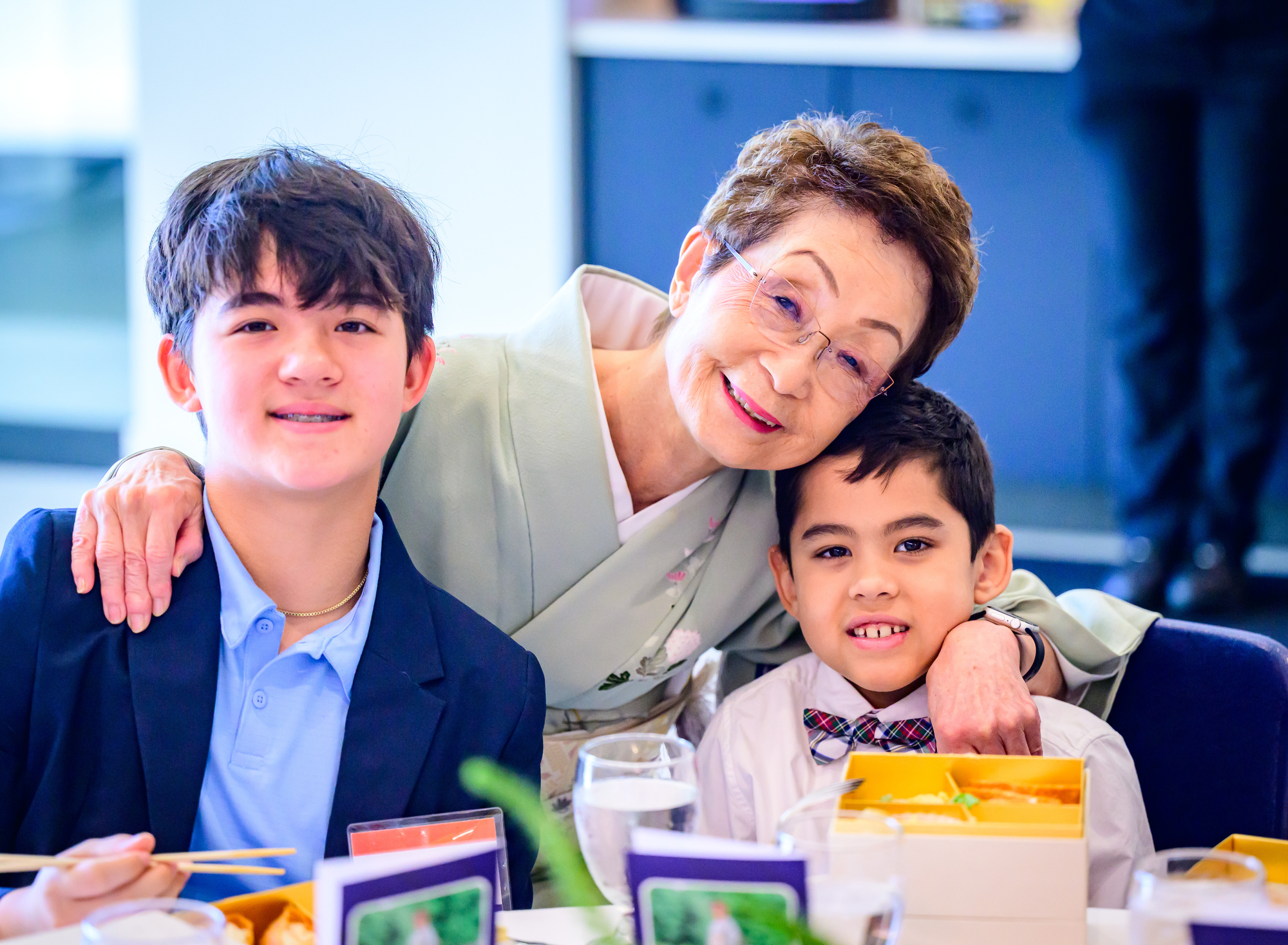
David Rubin, a professor of medicine at the University of Chicago, took Gunji’s Introduction to Japanese Culture course in 1988 as a junior.
“That class gave a young man from Illinois his first real window beyond it, beyond the Midwest, beyond the United States entirely. Through you and your patient, inspirational teaching, I came to understand the tea ceremony not as a set of steps but as a discipline of presence and respect, and ikebana not as decoration but as a lesson in restraint, in saying more with less,” Rubin said. “The questions of equity and international perspective I first explored in your class have stayed with me throughout my career.”
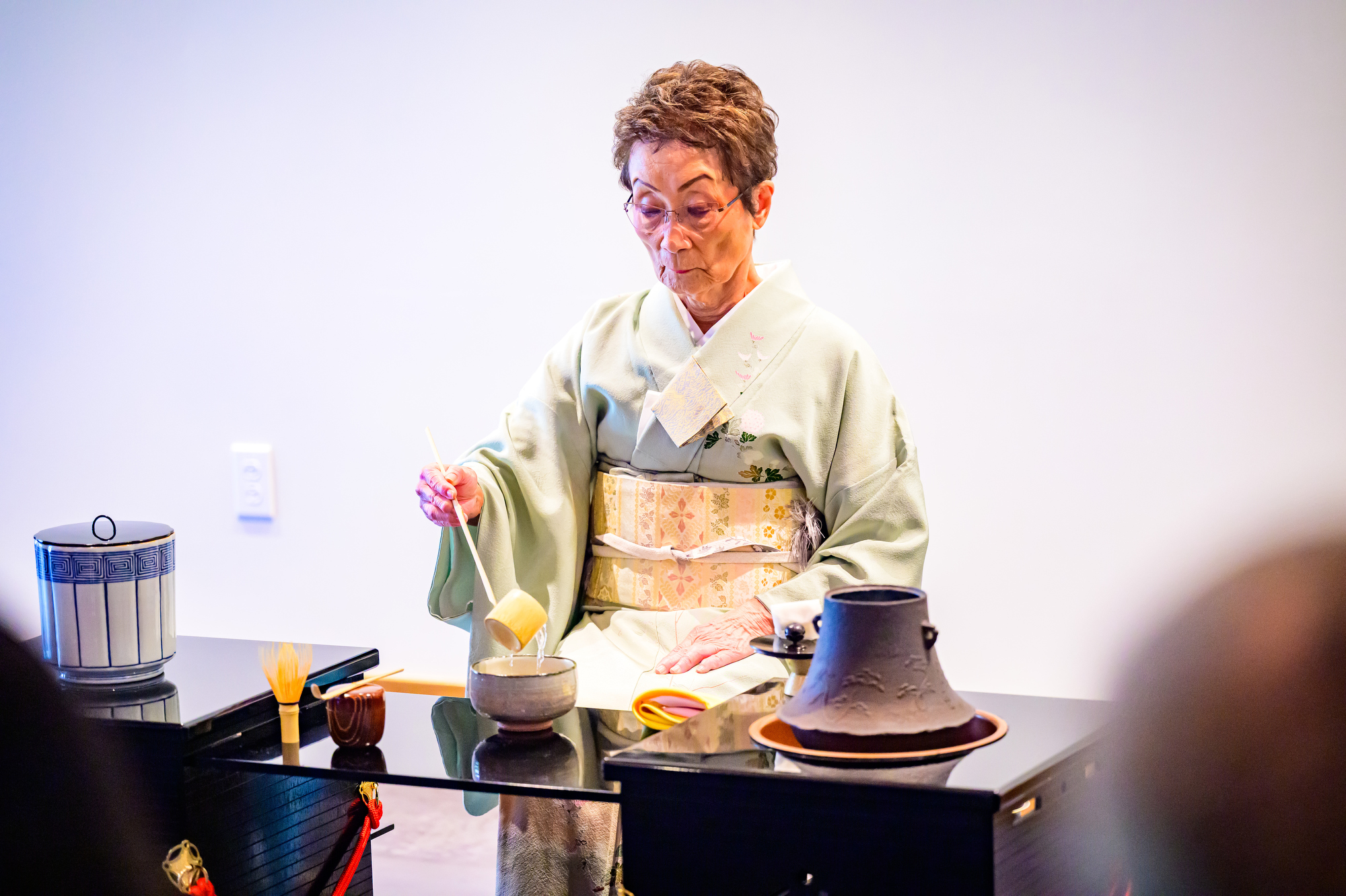
Gunji recalled her early years of teaching and how she received as much from her students as she gave.
“When I began teaching as a teaching assistant in 1973, my English was very limited, and I often struggled to find the right words. I would stand at the front of the class sounding like a broken record, going around and around, trying to explain what I wanted to say. Yet those early students were so kind and patient. Instead of making fun of me, they sat there with such empathy, trying to help me find the right words. That touched my heart deeply,” she said. “The kindness of those students warmed my heart, encouraged me and inspired me to continue teaching.
“Throughout my life, I have come to believe very strongly that no matter how different we may be in language, background, generation or age, kokoro — a sincere heart — can always find a way through,” Gunji said. “I have seen this myself, again and again, in this very place.”
Editor’s notes: To contact Kimiko Gunji or Diana Liao, email japanhouse@illinois.edu.